· SGI Team
Water is at the heart of every farm, and pumps are what move it. On many Indian farms, a borewell submersible pump brings water up from underground, and a surface pump moves it from tanks, ponds or canals to where it is needed. In this article we look at five common surface pump applications in agriculture, how they work alongside submersible pumps, and how to keep both working reliably.
A surface pump is installed above ground and draws water through a suction pipe from a nearby source. Because it sits at ground level, it is easy to install, inspect and repair. Its main limitation is suction lift: it can only pull water from a limited depth. For deeper water, such as in borewells, a submersible pump is used instead.
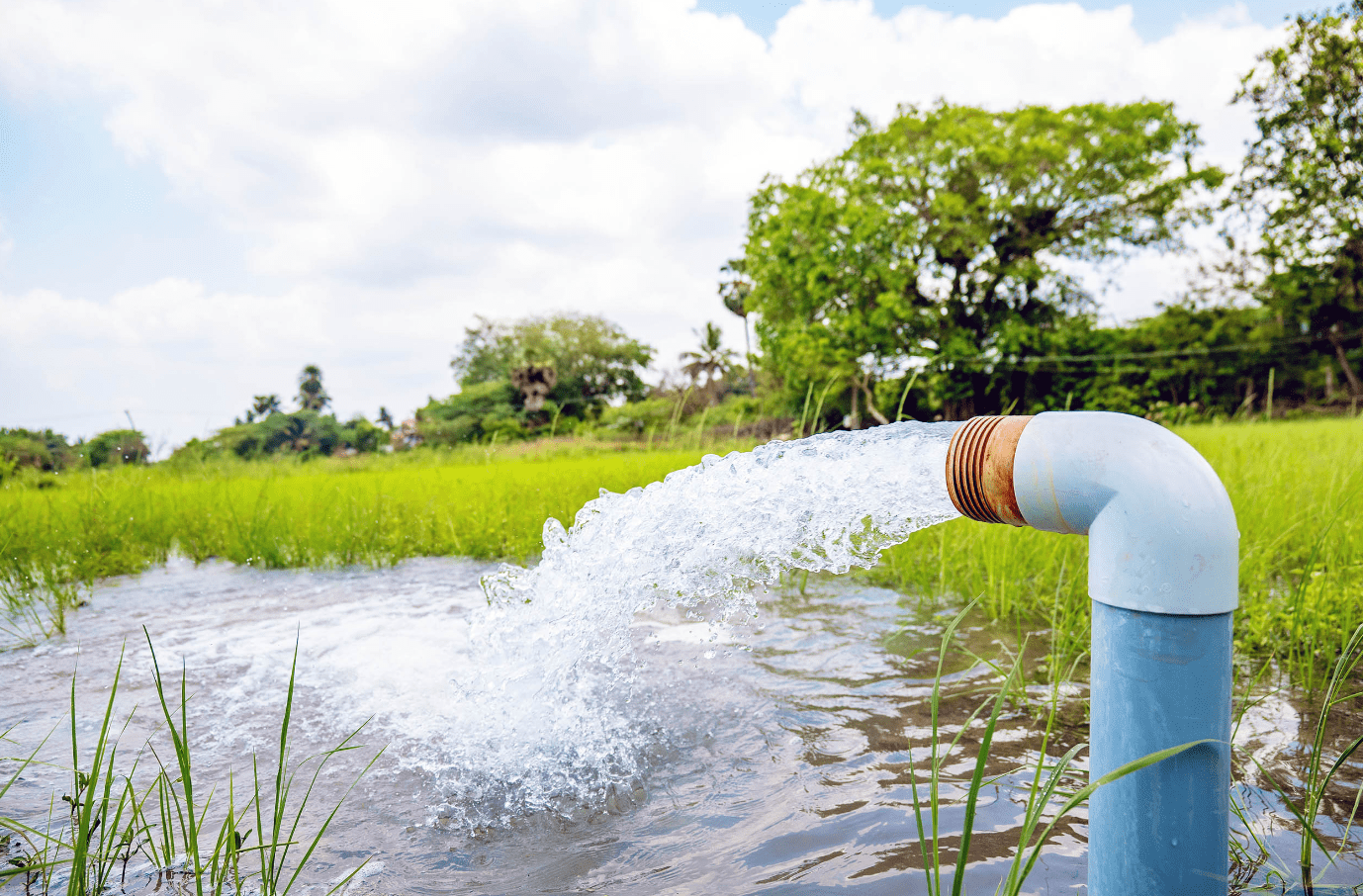
Where farms have access to a pond, canal, river or farm tank, surface pumps are commonly used to supply water to fields through channels or pipes. They can feed flood irrigation, furrows or pipelines to different parts of the farm.
Drip and sprinkler systems need a steady pressure to distribute water evenly. A surface pump drawing from a storage tank can provide that pressure. Many farmers fill a tank using a borewell submersible pump and then use a surface pump to feed the drip or sprinkler network, so each pump does the job it is best suited for.
Farms often store water in several places – overhead tanks, farm ponds and sumps. Surface pumps are a practical way to move water between them, for example to top up a header tank or to move water from a collection pond to a storage tank.
Dairy and livestock farms need a regular supply of clean water for drinking troughs and for cleaning sheds. A surface pump connected to a storage tank can keep troughs filled and supply hoses for washing. For remote grazing areas, solar-powered pumps are increasingly used to reduce dependence on grid power.
Surface pumps also help with mixing and filling sprayer tanks, washing produce and equipment, and supplying water to nurseries and greenhouses. Their portability makes them useful for these varied, everyday tasks.
Most farms that rely on groundwater use a borewell submersible pump. These pumps are usually V4 (for 4-inch borewells) or V6 (for 6-inch borewells). They sit underwater and push water to the surface, where a surface pump may take over for distribution.
| Task | Pump commonly used |
|---|---|
| Lifting water from a deep borewell | Borewell submersible pump (V4 / V6) |
| Moving water from a tank or pond | Surface pump |
| Feeding drip or sprinkler lines from a tank | Surface pump |
| Off-grid borewell pumping | Solar submersible pump |
A pump failure in the middle of the growing season can be costly. A few simple habits help:
Surface pumps are versatile workhorses on the farm, handling irrigation, tank transfer, livestock water and many everyday jobs. Paired with a reliable borewell submersible pump, they give farmers good control over their water. The long-term reliability of both depends on well-made parts.
Looking for reliable pump parts? Browse our engineering parts and submersible pump parts range, or contact Shree Gelma Industries in Rajkot to discuss your requirement, including OEM and custom orders.
Five practical ways surface pumps support Indian farming, how they work alongside V4 and V6 borewell submersible pumps, and simple tips for choosing and maintaining pumps on the farm.. SGI Team